
Antique chaise furniture with mahogany frame represents a pinnacle of craftsmanship and elegance. These pieces, often dating back centuries, combine exquisite design with the rich, warm tones of mahogany. Their graceful curves and intricate detailing speak to a bygone era of refined taste and meticulous artistry, offering a glimpse into the lives and styles of past generations. The enduring appeal of these chaises lies not only in their aesthetic beauty but also in their historical significance, making them coveted pieces for collectors and connoisseurs alike.
The use of mahogany, a prized hardwood known for its durability and lustrous finish, ensured that these chaises were built to last. Many examples survive today, testament to the skill and dedication of the artisans who created them. Different periods and styles are represented, reflecting evolving design trends and tastes. Examining these pieces allows us to appreciate the evolution of furniture design and the enduring influence of classic styles.
The chaise lounge, a symbol of refined leisure and opulent comfort, has captivated interiors for centuries. Among the most coveted examples are antique chaise lounges crafted from mahogany, a richly hued hardwood renowned for its durability and exquisite grain. This article delves into the world of antique mahogany chaise lounges, exploring their history, identifying key features, offering guidance on authentication and care, and addressing frequently asked questions.
A History of the Mahogany Chaise Lounge: Antique Chaise Furniture With Mahogany Frame
The chaise lounge’s ancestry traces back to ancient Roman and Egyptian designs, evolving over centuries into the elegant pieces we admire today. The 18th and 19th centuries witnessed a surge in popularity, particularly in Europe and North America, coinciding with the rise of mahogany as a prized furniture-making material. Mahogany’s rich reddish-brown tones, lustrous sheen, and ability to hold intricate carvings made it the perfect medium for expressing the ornate styles of the periods.
Styles ranged from the restrained elegance of Georgian and Regency pieces to the more flamboyant curves of the Victorian era. The availability of mahogany, coupled with skilled craftsmanship, led to the creation of a wide variety of chaise lounges, each reflecting the unique aesthetic preferences of its time.
Identifying Key Features of Antique Mahogany Chaise Lounges
Authenticating an antique mahogany chaise lounge requires careful examination of several key features:
- Wood Type and Quality: Genuine mahogany possesses a distinctive grain pattern and rich color. Examine the wood closely for inconsistencies; some variations are natural, but excessive uniformity might indicate a reproduction.
- Construction Techniques: Antique pieces often feature traditional joinery techniques like dovetail joints and mortise and tenon joints. Examine the construction for signs of hand-craftsmanship, which are less common in mass-produced reproductions.
- Hardware: The hinges, casters, and other metal components offer valuable clues. Original hardware is often hand-forged or features distinctive markings. Replacements are usually readily apparent.
- Style and Ornamentation: The style of the chaise lounge (e.g., Georgian, Regency, Victorian) will influence its overall design and decorative elements. Researching the stylistic features of different periods is crucial for accurate identification.
- Upholstery: While upholstery is often replaced over time, the original fabric (if present) and its construction can provide valuable clues. Look for hand-stitching and high-quality materials.
Styles and Periods of Antique Mahogany Chaise Lounges
The style of your antique mahogany chaise lounge will significantly impact its value and aesthetic appeal. Here are some of the most sought-after styles:
Georgian Chaise Lounges (1714-1837):
Characterized by their elegant simplicity, Georgian chaise lounges often feature straight lines, refined proportions, and subtle ornamentation. The focus is on quality craftsmanship and the inherent beauty of the mahogany itself.
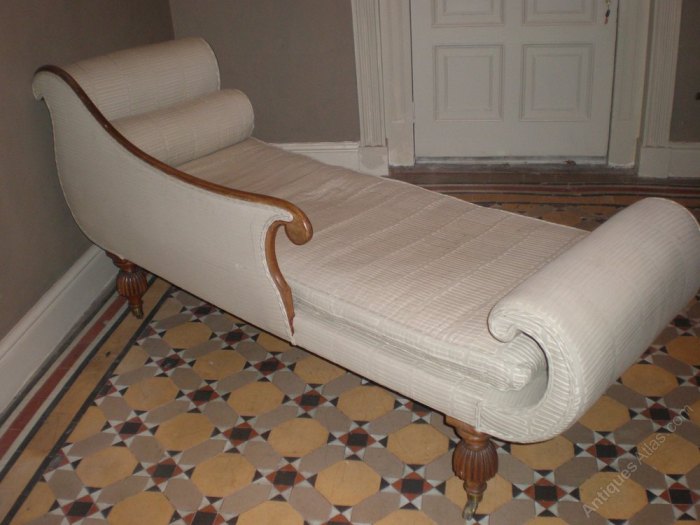
Regency Chaise Lounges (1811-1837):, Antique chaise furniture with mahogany frame
Regency style embraces more elaborate curves and ornamentation than Georgian pieces. Think graceful lines, inlaid details, and potentially gilded accents. The overall effect is one of refined luxury.
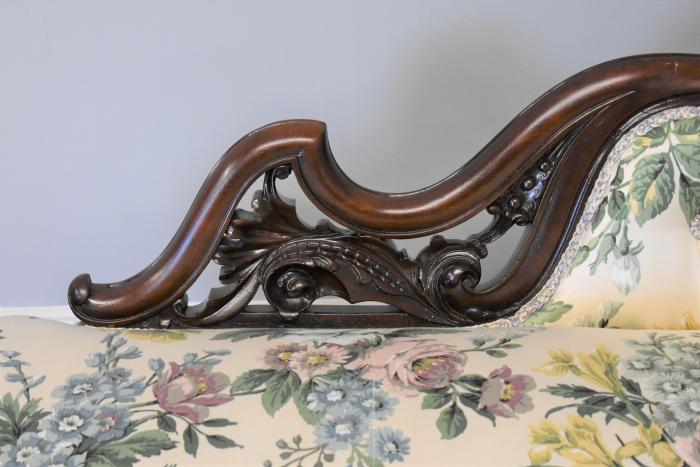
Victorian Chaise Lounges (1837-1901):
Victorian chaise lounges are known for their ornate detailing, plush upholstery, and often extravagant designs. They might incorporate carved embellishments, intricate inlays, and rich fabrics.
Caring for Your Antique Mahogany Chaise Lounge
Preserving the beauty of your antique mahogany chaise lounge requires diligent care:
- Dust Regularly: Use a soft cloth or feather duster to remove dust regularly. Avoid harsh chemicals or abrasive cleaners.
- Protect from Direct Sunlight: Prolonged exposure to direct sunlight can fade the mahogany’s finish. Use curtains or blinds to filter sunlight.
- Maintain Proper Humidity: Extreme humidity or dryness can damage the wood. A humidifier or dehumidifier can help maintain a stable environment.
- Professional Cleaning and Restoration: For significant cleaning or restoration, consult a reputable antique furniture specialist. Improper cleaning can damage the finish or underlying wood.
- Avoid Harsh Chemicals: Never use harsh chemicals, abrasive cleaners, or excessive moisture on your antique chaise lounge. Always test any cleaning product on an inconspicuous area first.
Frequently Asked Questions (FAQs)
- Q: How can I tell if my chaise lounge is truly antique? A: Consult with an antique appraiser or furniture expert. They can examine the piece for hallmarks of age, construction techniques, and stylistic features.
- Q: What is the average price of an antique mahogany chaise lounge? A: The price varies greatly depending on age, condition, style, and provenance. Prices can range from a few hundred dollars to tens of thousands of dollars.
- Q: How do I clean the upholstery on my antique chaise lounge? A: The cleaning method depends on the upholstery material. For delicate fabrics, professional cleaning is recommended. Always test any cleaning product on an inconspicuous area first.
- Q: Where can I find antique mahogany chaise lounges for sale? A: Antique shops, auction houses, online marketplaces (like eBay), and specialized antique furniture dealers are good places to start your search.
- Q: What are the common signs of damage to look for in an antique chaise lounge? A: Look for cracks in the wood, loose joints, damaged upholstery, and missing or damaged hardware. These can affect the value and structural integrity of the piece.
Resources
- Invaluable (Online auction site with antique furniture)
- LiveAuctioneers (Online auction site specializing in antiques)
- (Add other relevant links to reputable antique furniture resources and museum websites)
Call to Action
Ready to add a touch of timeless elegance to your home? Start your search for the perfect antique mahogany chaise lounge today! Explore reputable antique dealers and auction houses to discover the unique piece that will become a cherished heirloom.
FAQ Guide
What are the common signs of wear and tear to look for when buying an antique mahogany chaise?
Look for cracks in the wood, loose joints, significant scratches or water damage. Check the upholstery for wear, tears, and fading. Examine the frame for any signs of insect infestation.
How do I clean and care for an antique mahogany chaise?
Dust regularly with a soft cloth. Avoid harsh chemicals or abrasive cleaners. For upholstery, use appropriate cleaning methods based on the fabric type. Consider professional cleaning for delicate materials or significant soiling.
How can I determine the age and value of my antique mahogany chaise?
Consult with an antique appraiser or furniture expert. They can examine the piece’s construction, style, and markings to determine its age and assess its value. Researching similar pieces sold at auction can also provide some indication of value.